January 27, 2012 9:03 pm
Financial Times
By Peter Aspden
 |
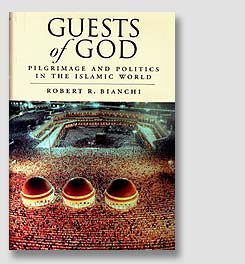
| The British Museum’s exhibition about the Hajj shows that modernity and secularism do not always go hand in hand It is a journey that has changed the lives of many of the millions who have completed it. Yet the Hajj, the pilgrimage to Mecca that is one of the five pillars of the Islamic faith, has been relatively little studied and understood in the west. It is not for lack of curiosity. In the early 16th century Italian aristocrat Ludovico Varthema became one of the first European non-Muslims to enter the holy site, “longing for novelty as a thirsty man longs for fresh water”. He found his novelty – he managed to observe unicorns strolling around the site – but also punctured a myth or two: the tomb of the Prophet Mohammed, he noted a little disappointingly, was not suspended in the air as dictated by medieval European legend (indeed, it was in another city entirely: Medina). The British Museum’s new exhibition on the Hajj is the most complete such enterprise yet undertaken. In a story that stretches from ancient beginnings to modernity, many of the rituals are unchanging, even if the infrastructure surrounding the trip has transformed dramatically. What was once a perilous voyage with serious risk of illness or loss of life is today administered by specialist travel agents who offer packages with visas and vaccinations included. It is just as well: annual visitors are estimated to top the 3m mark in the next few years. It is a testament both to the enduring hold of the Islamic faith and to the ability of this remarkable event to adapt with the times. -more |
British Musuem Link
